
AfterWords | Come to the Table – The Gift of Lament
AfterWords is a series of reflections by contributors as they share their personal experience of God in community at The Parish on Sundays.
- Listen to the original Sunday service podcast this post is engaging with.
- Be notified via email whenever new content like this is added to The Parish blog.
A short read
by Jane Borozan
Come to the table. Come as you are—glad, sad, mad, anxious, grieving, stuck, content, furious, longing, joyful. All are welcome at the Table. The body of Christ. Given for you. The blood of Christ. Poured out for you. Come to the River of Life. Could there be a better invitation?
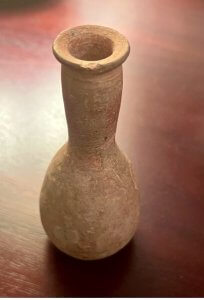
I came to my Parish community and the Table Sunday with my jar of tears. Hope has vanished, only tears. That is all. All I had to offer. And it was enough. Because the broken body of Christ came for me. And keeps coming for me, and for everyone, wherever we are in our messy stories. What a beautiful God. He sees me and soothes and pours out His very life for me. And for you. No greater love exists in this world. And through in-the-flesh friends who reach out in love and lunch and linger knee-to-knee with you when all you can do is weep, for the everyday Parish saints who courageously speak truth into your life, He comes with skin on Him.
Lament is a beautiful gift. When all is not right in my life and in the world, sometimes all I can do is lament. With a cursory look, who can deny that in all corners of this world, things are not as they should be? When each day’s news cycle delivers fresh reminders of suffering and injustice committed against our local and global brothers and sisters, who can deny our planet is deeply off kilter? And as we notice our own inner landscape and realities weaving in and out of all kinds of sorrow for protracted seasons—weeks, months, years—we may long to cry out like a wounded puppy, or louder. The gifts of pain and lament can be our teachers and perhaps even healers in these times. They have been mine.
What does the practice of lament offer sad, angry, scared, frustrated, and anguished people like you and me? When a big enough container to carry all the emotions doesn’t seem to exist, lament may be a divine gift of grace, mysteriously drawing us closer to the heart of Jesus.
Through the lens of the Psalms, lament gives permission to speak boldly to God. It is a tool, a posture, a framework used by God’s people in Scripture to navigate suffering when life, and maybe God, doesn’t make sense. It is not primarily a complaint, or a crutch, a sign of weakness, or whining. Lament is both pain and promise.
For those who may question such raw honesty with God, Philip Yancey, in his book, Disappointment with God, writes: “More passionately than anyone in history, the prophets of Israel gave voice to feelings of disappointment with God. Why do godless nations flourish, they asked? Why is there such poverty and depravity in the world? Where are you, God? Why do you forsake us so long?!” (p. 86). Yancey goes on to remark being impressed with a God who allows us the freedom to rebel, to lament, to cry out in anguish, and even gives us the words to use.
We can never forget Jesus’ tormented words from the cross, “My God, my God, why have you forsaken me?” (Mt. 27:46; Mark 15:34). Our Lord wrestled with feelings of abandonment at the most vulnerable moment of His life. We can be assured we are in good company when we come to God with our gut-honest expressions, just as a loving parent desires with a child.
Lament is an act of worship, a hunger for God, a safe space. It can take the form of a prayer, a poem, a song. One night recently, my grief spilled out in words of lament.* Afterwards, I reflected on how, in a tiny way, my suffering united with Christ’s suffering. Like Simon the Cyrene, I was helping Jesus carry his cross to Golgotha, and He was carrying me. In my heart, I come back to this image frequently, and it brings great consolation to my soul.
If you would like to experiment with creating a prayer of lament (and thanksgiving) from your life and circumstances, you may want to read “Unearthing the Heart,” a helpful and lovely Renovare resource found here (made available with permission).
Come home to the Table, to the Father’s life-giving body. Week after week, month after month, year after year, in the community and crucible of God’s beloveds, we are transformed, and go forth, blessed to be a blessing to a broken and beautiful world.
* I am happy to share my written lament with anyone. Please reach out if interested!
Want to contribute to AfterWords? From poems to paintings to a child’s drawing in Parish Kids, we welcome voices from those who call the Parish home. To learn more, email info@parishanglican.org